WordPress Templates
A fifty-nine dollar template and a properly customized one can be the same file. The difference is entirely in what happens to it after the purchase, not what was in the box.
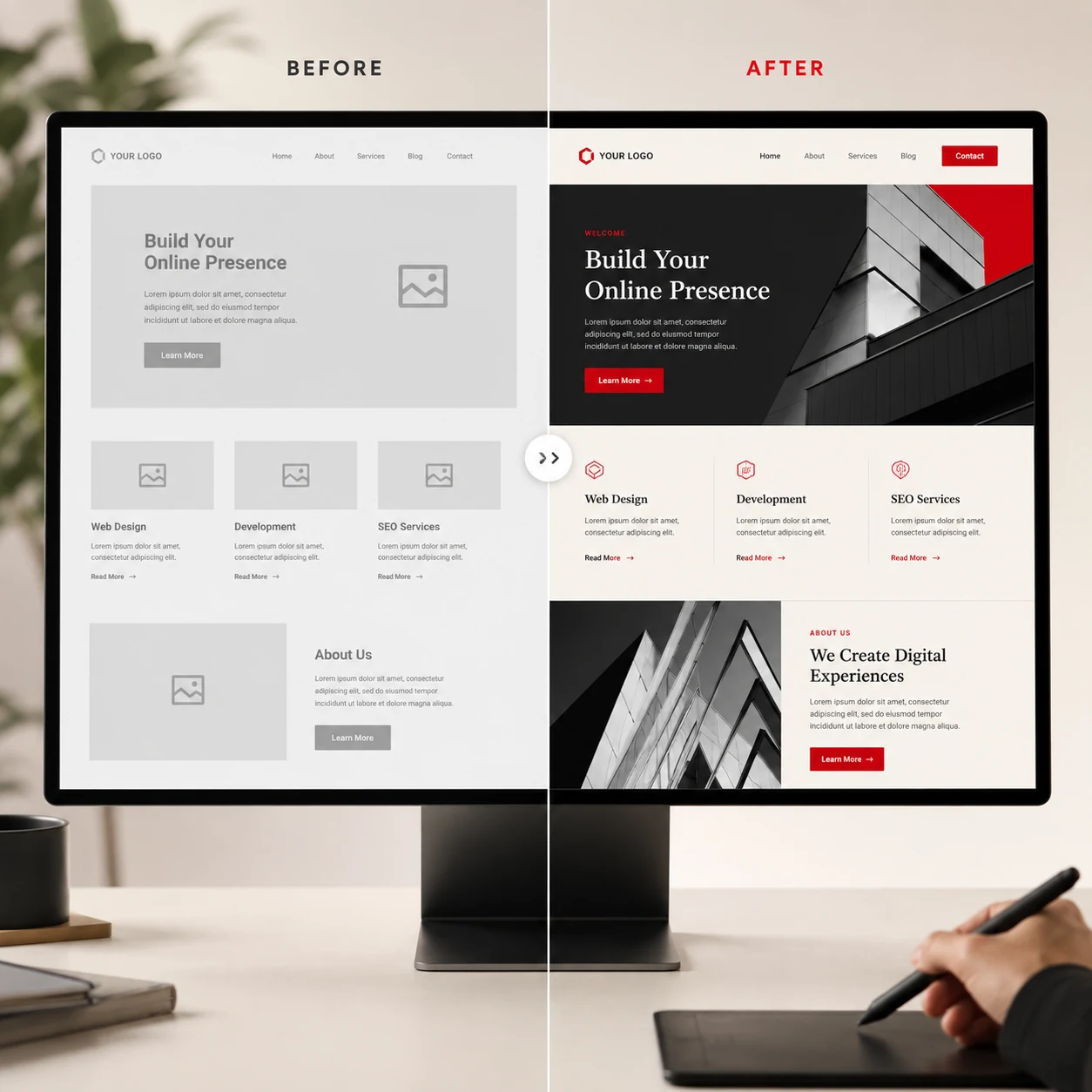
Most businesses that buy a premium WordPress template expect to save the cost of a custom build. Many do, if the template is vetted properly, trimmed of the plugins it does not need, and customized through a child theme so the next update does not erase the changes. Just as many end up worse off than a custom build would have been: the demo content never quite matches what the business sells, fifteen bundled plugins slow the site to a crawl, and six months later the site looks identical to two other local competitors who bought the same template from the same marketplace. NextEnvision selects, customizes and cleans up WordPress templates for businesses and agencies across Australia, the United Kingdom and Singapore, so the template becomes a genuine head start instead of a liability discovered after launch.
What Actually Goes Wrong With a Purchased WordPress Template
A premium WordPress template from a marketplace like ThemeForest or Envato Market usually ships as a working demo built to sell the template, not as the finished site a specific business needs. Three problems show up consistently once a business tries to make it their own. First, the demo content, stock photography, placeholder copy, sample services, gets replaced page by page, and the layout that looked balanced with the demo content often breaks slightly once real content of a different length goes in. Second, the template bundles a long list of plugins for sliders, page builders and demo importers that most businesses only need once, during setup, and never again, and each one that stays active adds load time and a maintenance burden nobody asked for. Third, and least visible at launch, editing the template’s core files directly to match the brand means the next theme update either gets skipped indefinitely out of fear, or gets applied and wipes every customization made. NextEnvision treats a purchased template as a starting point that needs the same engineering discipline as a custom WordPress build, not a finished product to leave untouched.
WordPress Templates Services From Selection to Launch
Six services covering how a WordPress template is chosen, customized, cleaned up and kept safe from future updates.
Premium Template Selection and Vetting
Template selection checks update frequency, support rating and changelog history rather than the demo screenshot alone, since a template that has not shipped an update in over a year is a security and compatibility risk regardless of how the demo site looks today.
Child Theme Customization
Every customization is built into a child theme that inherits the parent template’s function while keeping brand-specific CSS, layout tweaks and custom functions in separate files the next parent theme update cannot touch or overwrite.
Template Bloat and Bundled Plugin Cleanup
The bundled plugin list that ships with most premium templates is audited against what the site actually uses. Slider plugins, redundant page builders and demo-import tools that served their purpose once are removed rather than left active indefinitely.
Full Site Editing Block Theme Templates
Where the template is a modern block theme, customization happens through theme.json and reusable block patterns instead of custom CSS overrides, which keeps the site compatible with the WordPress Full Site Editing roadmap rather than working against it.
Brand-Unique Template Redesign
Colour, typography, spacing and imagery are reworked deliberately so the finished site does not read as the same template a visitor may have seen on a competitor’s site, using the business’s own brand assets as the starting reference, not the template demo.
Reusable Template Kits for Agencies
For agencies that rebuild similar sites repeatedly, a customized template becomes a reusable internal kit, a vetted, cleaned-up, brand-flexible starting point that cuts weeks off every new client build under your agency’s white label delivery.
The WordPress Templates Customization Stack
Every template project starts with a child theme scaffolded against the parent template’s actual hook and filter structure, not a generic child theme boilerplate that assumes functions the specific template may not expose. Version control tracks every customization from the first commit, so a rollback is a git command rather than a rebuild if a change causes a layout regression. Query Monitor profiles the site with the full bundled plugin list active, then again after cleanup, so the performance gain from removing unused plugins is measured rather than assumed, benchmarked against Core Web Vitals field data. Where the template is a block theme, theme.json controls global styles and spacing tokens directly, which keeps customization compatible with core WordPress updates instead of relying on CSS overrides that can conflict with a future core release.

Four Fundamentals of Working With WordPress Templates
Update-Safe Customization
Performance Cleanup
Customizations live in a child theme rather than the parent template’s core files, so the next security or compatibility update from the template author can be applied without wiping months of accumulated brand-specific changes.
Brand Differentiation
The bundled plugin list is audited against actual site usage rather than left at whatever the template installed by default, with sliders, redundant builders and one-time demo-import tools removed once their job is done.
Modern Block Theme Architecture
Typography, colour, spacing and imagery are reworked around the business’s own brand rather than the template’s stock demo styling, so the finished site does not read as an obviously recognisable template to a visitor who has seen it elsewhere.
Applied to Every Template Project NextEnvision Delivers
Where the template supports Full Site Editing, theme.json and block patterns replace custom CSS overrides for global styling, keeping the site aligned with the direction WordPress core itself is moving rather than fighting against it.
White Label WordPress Template Customization for Agencies
Agencies that sell a client on a fast, template-based build sometimes underestimate the customization work required to make a marketplace template look like a finished, brand-specific site rather than a recognisable demo with a new logo. NextEnvision’s agency partner programme handles the vetting, child theme setup, cleanup and brand customization under your agency’s name, with a mutual NDA signed before any client detail changes hands.
The white label engagement covers template selection, child theme build, bundled plugin cleanup and a final brand differentiation pass, delivered with clean version-controlled source and staging access your account team can review before it reaches the client. AEST, GMT and SGT working hours are planned into every project timeline. See the full white label development terms for commercial detail.

Why Template-Based Builds Go Wrong Without Discipline
Two failure patterns account for most of the template rescue projects NextEnvision handles. The first is direct editing of the parent template’s core files: a freelancer or the business owner opens the template’s own PHP or CSS files and changes them to match the brand, which works perfectly until the template author ships a security patch, at which point applying it either overwrites every customization silently or gets skipped indefinitely, leaving the site running an outdated, increasingly vulnerable version of the template, the exact scenario WordPress’s own child theme documentation warns against. The second is unmanaged plugin bloat: a template that shipped with a slider plugin, a demo-import tool, a page builder and three icon libraries keeps all of them active long after launch, because nobody audits what is actually load-bearing versus what only mattered during the initial setup, and the site accumulates load time and attack surface with nothing to show for it. Both problems are invisible in a browser tab that loads the homepage fine. They show up in a stalled update, a failed security scan, or a Core Web Vitals score that quietly drops over a year of accumulated plugin weight.
WordPress Templates Engagement Models
New Site From a Vetted Premium Template
Existing Template Cleanup and Update-Proofing
A new WordPress site built from a vetted premium template, with a child theme set up from the first commit and the bundled plugin list reduced to what the site actually needs before real content goes in.
Full Site Editing Block Theme Build
An existing template-based site audited for direct core-file edits, unmanaged bundled plugins and stalled updates, migrated onto a proper child theme structure so future template updates can finally be applied safely.
Agency Template Kit Development
A modern block theme configured through theme.json and reusable block patterns, built for businesses that want the editing flexibility of Full Site Editing without the plugin overhead a classic template-plus-page-builder combination usually carries.
Every Template Model Includes a Child Theme Setup
A reusable, brand-flexible template kit built once and refined across repeat client projects for agencies that deliver similar site types regularly, cutting weeks off the setup phase of every subsequent build.
How WordPress Templates Are Vetted, Customized and Launched
Six phases from template vetting to post-launch maintenance, each one signed off before the next begins.
Discovery: Template Vetting Against Requirements
Candidate templates are checked against update history, support responsiveness and changelog frequency, not the demo screenshot alone, since a template with no update in over a year is excluded regardless of how polished it looks.
Foundation: Child Theme and Version Control Setup
A child theme is scaffolded against the chosen template’s actual structure, and every file is placed under version control from the first commit, so future changes can be rolled back without rebuilding from scratch.
Customization: Brand Styling Without Core Edits
Typography, colour, spacing and imagery are reworked around the business’s own brand assets, applied through the child theme or theme.json rather than direct edits to the parent template’s core files.
Cleanup: Bundled Plugin and Bloat Audit
The full bundled plugin list is profiled with Query Monitor, and anything not load-bearing for the finished site, demo importers, redundant sliders, unused icon libraries, is deactivated and removed.
Content: Demo Replacement and Real Content Population
Demo content is replaced page by page with the business’s real services, copy and imagery, checking that the layout still holds together once content of a genuinely different length and structure goes in.
Post-Launch: Update Testing and Template Maintenance
Template updates are tested on staging before being applied to the live site, and a maintenance note documents exactly what was customized, so a future developer does not have to reverse-engineer the changes from scratch.
WordPress Templates: Selection and Customization FAQs
Questions about premium templates, update-safe customization, block themes, bundled plugins and agency template kits.
Should I buy a premium WordPress template from ThemeForest or have one built custom?
A vetted premium template is a reasonable choice for a business with a standard page structure and a modest budget, provided it is properly customized rather than left as-is. A custom build makes more sense where the business needs specific functionality a template was never designed around, or where looking distinctly different from every other business using the same marketplace template matters more than launch speed and cost. NextEnvision reviews the specific requirements against several candidate templates before recommending either path, rather than defaulting to one option regardless of the project.
How do you customize a template without it breaking on the next update?
All brand-specific customization goes into a child theme rather than the parent template’s own files, which is the standard WordPress method for exactly this problem. The child theme inherits the parent template’s functionality and styling, while overrides, custom CSS and any additional functions live in separate files the parent theme’s update process never touches. When the template author releases a new version, it applies cleanly on top of the unchanged parent files, and the child theme’s customizations remain intact without needing to be reapplied.
What is a WordPress block theme or Full Site Editing template?
A block theme is a newer WordPress theme format that uses Gutenberg blocks and a theme.json configuration file to control the entire site, including the header and footer, rather than relying on separate PHP template files and a page builder plugin for layout. It gives editors more visual control directly inside the standard WordPress editor without installing a third-party page builder. Not every business needs one yet, since plugin and theme support for block themes is still maturing, but it is the direction WordPress core itself is moving toward.
Will my site look like every other business that bought the same template?
Only if the template is used with the demo styling largely intact, which is common with a quick DIY setup and is exactly what a proper customization pass is meant to prevent. Reworking typography, colour palette, spacing and imagery around the business’s actual brand, rather than the template’s stock demo content, is usually enough to make a shared template unrecognisable as such to an ordinary visitor, even though the underlying page structure is the same file another business also purchased.
What do you do with all the extra plugins that come bundled with a premium template?
Every bundled plugin is profiled with Query Monitor to see whether it is actually load-bearing for the finished site. Demo-import tools that only mattered during initial setup, redundant page builders where the site does not need drag-and-drop editing, and duplicate icon or slider libraries are deactivated and removed. What remains is kept, updated and included in the ongoing maintenance schedule, rather than every plugin the template shipped with being left active indefinitely by default.
Can you build a reusable template kit for our agency to reuse across client projects?
Yes. For agencies that deliver a similar type of site repeatedly, whether that is local service businesses, clinics or professional firms, a customized, cleaned-up template becomes a reusable internal starting point rather than a one-off build. The kit includes the vetted parent template, the child theme structure, a stripped bundled plugin list and a brand-flexible style system, so each new client project starts from a proven foundation instead of the setup and cleanup work being repeated from zero every time.